
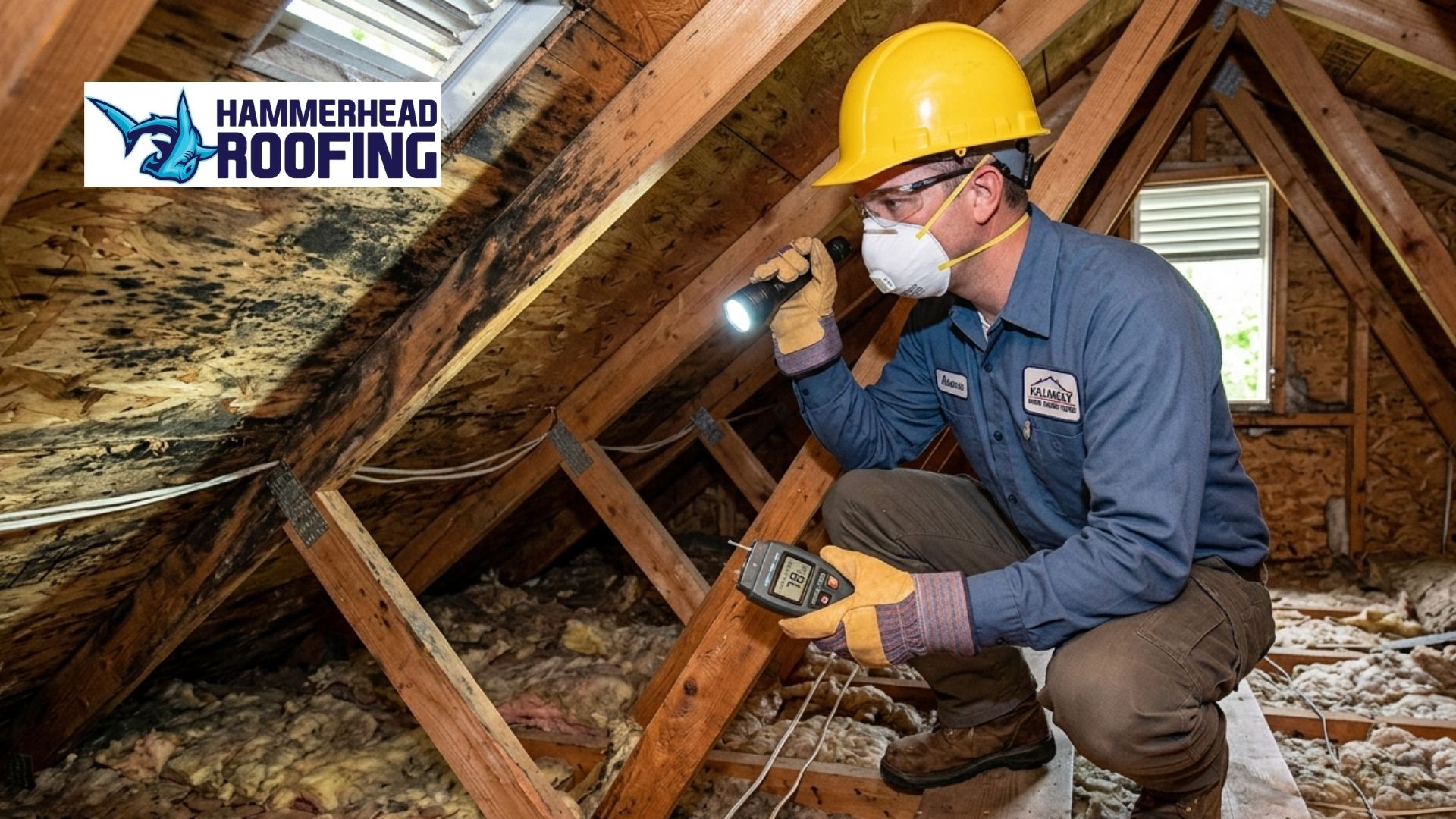
If you are wondering whether high humidity leads to attic mold, the answer is yes. Warm, damp air can collect in your attic and support mold growth when it cannot escape. This guide explains how moisture gets inside, which warning signs to watch for, and how to protect your Killingly home.
Key Takeaways:
|

Why Can High Humidity Lead to Attic Mold?
Mold needs warmth, moisture, and a surface where it can grow. Your attic contains wood, insulation, dust, and other materials that can support mold. During a humid Connecticut summer, trapped air may leave those materials damp.
One muggy day usually will not cause a major problem. The risk increases when moisture remains for several days or keeps returning. That is why the answer to “can high humidity in Killingly summer lead to attic mold?” depends heavily on your roof, ventilation, and indoor moisture levels.
For example, a bathroom fan may release damp air into the attic instead of outdoors. Each shower adds more moisture. If blocked vents prevent that air from escaping, mold may begin forming on the underside of the roof decking.
How Does Moisture Enter Your Attic?
Moisture does not always come through a large, visible roof leak. It can enter from outside or rise from the rooms below. Finding the source matters because mold will likely return if the area keeps getting damp.
1. Small Roof Leaks
Worn flashing, cracked shingles, damaged pipe boots, and loose vents can allow small amounts of rain inside. The water may dampen the decking or insulation without reaching your ceiling. High humidity then slows the drying process, leaving materials wet longer.
2. Household Air Leaks
Warm household air naturally rises through gaps around wiring, plumbing pipes, light fixtures, ducts, and attic doors. This air carries moisture from showers, cooking, laundry, and normal daily activities. Even small gaps can add a surprising amount of moisture over time.
3. Improperly Vented Exhaust Fans
Bathroom fans and dryer vents should release air outside the house. When they empty into the attic, they send warm, damp air directly beneath the roof. Dark decking or wet insulation near the vent pipe may be the first clue.
4. Blocked Attic Vents
Soffit vents bring fresh air into the attic, while ridge or roof vents allow warm air to leave. Insulation, leaves, nests, or poor installation can block this airflow. The result may be high attic humidity, even when the roof itself is not leaking.
What Are the Signs of Attic Mold?
Attic mold often grows out of sight. You may notice an odor or an uncomfortable upstairs room before you see the actual growth.
Common warning signs include:
- A musty or earthy smell
- Black, gray, green, or white spots on wood
- Dark stains around roofing nails
- Damp or flattened insulation
- Rust on nails and metal fasteners
- Moisture on ducts or roof decking
- Peeling paint near the ceiling
- Upper rooms that feel damp or stuffy
Not every dark mark is mold. Old water stains, dirt, soot, and natural wood discoloration can look similar. Avoid scraping the area if you are unsure, since disturbing possible mold may release spores.
These signs may help explain “can high humidity in Killingly summer lead to attic mold?”, but they can also point to a hidden roof leak. A professional inspection can identify the moisture source before damage spreads.
How Can You Prevent Attic Mold in Killingly, CT?
You do not need to remove every bit of humidity from your attic. The goal is to keep moisture from building up and remaining long enough to cause damage.
1. Check the Ventilation
Make sure soffit, ridge, and roof vents are open and clear. Insulation sometimes covers soffit vents from inside, blocking airflow even when everything looks fine from the ground. A roofer can check whether the attic has balanced intake and exhaust ventilation.
2. Manage Indoor Moisture
Use bathroom and kitchen exhaust fans whenever you create steam, and confirm that they vent outdoors. Air conditioning or a dehumidifier can also help during muggy weather. A basic humidity monitor makes it easier to spot rising moisture levels.
3. Seal Ceiling Gaps
Seal openings around plumbing lines, wires, ducts, and the attic access door. This limits the warm household air that can rise into the attic. Ask a professional before sealing around recessed lights because some fixtures require special materials or clearance.
4. Inspect the Roof After Storms
Strong wind and heavy rain can loosen shingles or damage flashing. After severe weather, check the attic for new stains, damp decking, or wet insulation. A small repair now may prevent a much larger moisture problem later.
5. Keep Gutters Clear
Clogged gutters can overflow and soak the fascia, roof edge, and nearby decking. Remove leaves and debris before heavy summer rain. Make sure the downspouts carry water away from your foundation as well.
When asking “can high humidity in Killingly summer lead to attic mold?”, remember that humidity is usually only part of the problem. Reliable attic mold prevention also involves repairing leaks, sealing air gaps, and keeping vents clear.
What Should You Do If You Find Attic Mold?
Do not paint over the area or clean it without looking for the moisture source. Take photos from a safe distance and avoid disturbing widespread growth. Scraping or brushing mold may send spores into the air.
Have the roof and ventilation system inspected first. A roofer can check the shingles, flashing, vents, decking, and insulation for damage or moisture. You may also need a mold remediation specialist if the affected area is large.
Repair the leak or airflow problem before replacing insulation or removing widespread mold. Otherwise, the growth may return during the next stretch of humid weather.
Frequently Asked Questions
Can humidity cause attic mold without a roof leak?
Yes. Humid household air can enter through ceiling gaps and collect in an attic with limited airflow, even when the roof does not leak.
How quickly can mold grow in a damp attic?
Mold may begin growing within a few days if wood or insulation stays damp. You might not notice it right away because growth often starts in dark corners or behind insulation.
Does summer attic heat kill mold?
No. Attic heat may dry the surface for a while, but it does not reliably remove mold or prevent it from returning when moisture rises.
Will adding more roof vents stop attic mold?
Not always. New vents may improve airflow, but you must also repair leaks, seal ceiling gaps, and redirect exhaust fans that release air into the attic.
Can high humidity in Killingly summer lead to attic mold?
Yes, it can become a yearly problem if moisture continues entering the attic or cannot escape. Fixing leaks, improving airflow, and controlling indoor humidity can lower the risk.
Keep Your Attic Dry. Call HammerHead Roofing Today!
HammerHead Roofing can inspect your roof, flashing, vents, and other trouble spots to help find the source. Contact HammerHead Roofing today to schedule a roof and attic inspection in Killingly, CT, or a nearby community.