
Winter roof replacement maintenance tips can help homeowners avoid leaks, ice damage, and expensive repairs during the cold months. A little roof maintenance before and during winter can go a long way, especially when snow, freezing rain, and strong winds start hitting Connecticut homes.
Key Takeaways:
|
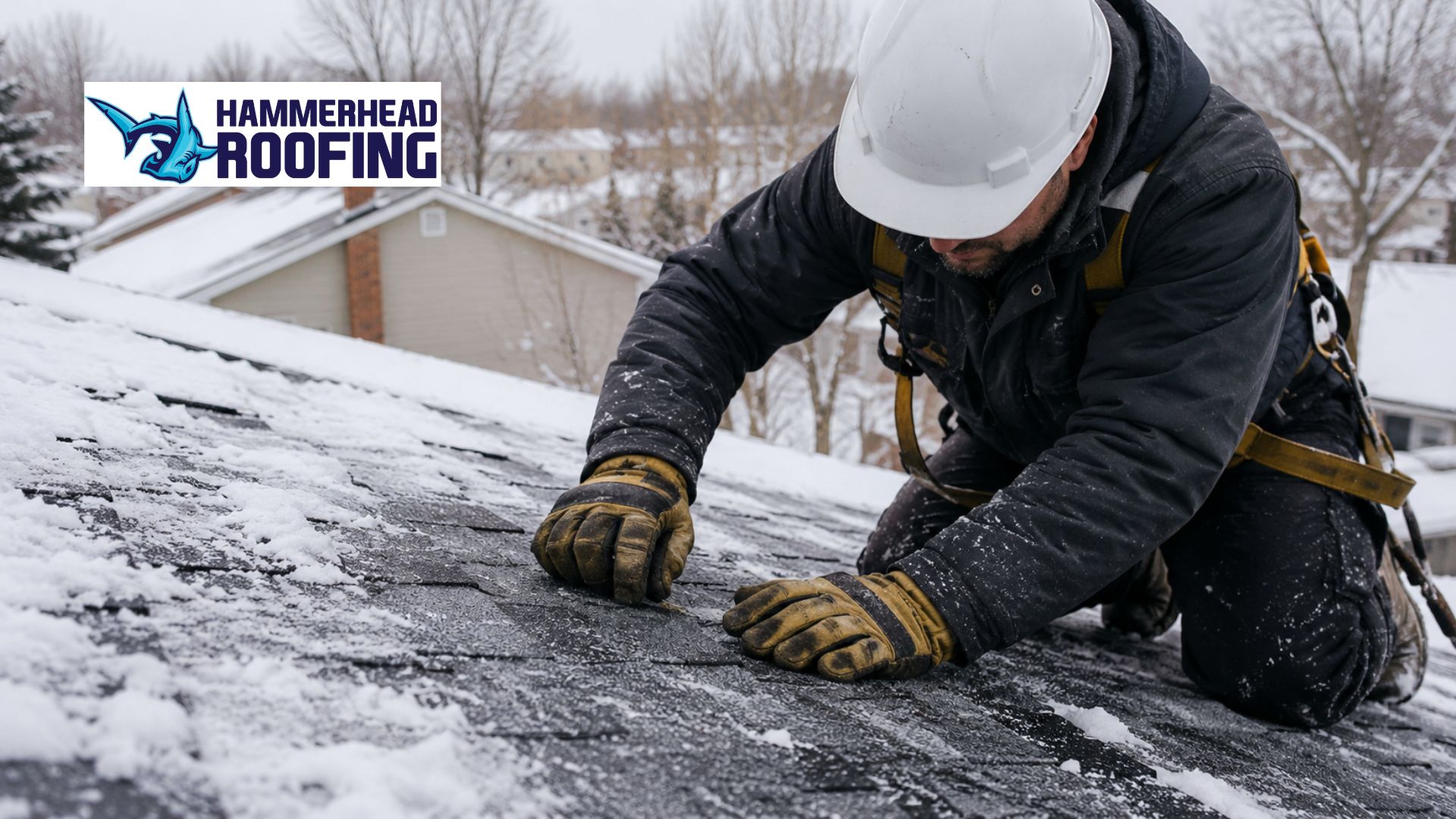
Winter Roof Replacement Maintenance Checklist
Before we get into the details, here’s a quick checklist you can follow this winter.
✔ Check shingles for damage
✔ Clean gutters and downspouts
✔ Remove heavy snow buildup
✔ Watch for ice dams
✔ Check your attic for moisture
✔ Fix small roof problems early
✔ Trim tree branches near the roof
✔ Watch for ceiling stains or leaks
Winter Roof Replacement Maintenance Tips
1. Check Shingles Before Winter Gets Worse
One of the most important winter roof replacement maintenance tips is checking your shingles early.
A roof might look fine from the ground, but loose or cracked shingles can quickly turn into leaks once snow and ice settle in.
Look for things like:
- Missing shingles
- Curled edges
- Dark patches
- Loose flashing
- Bald spots on shingles
If something looks off, it’s better to deal with it now instead of during a snowstorm.
2. Clean Gutters Before They Freeze
This one gets overlooked a lot.
When gutters fill up with leaves and debris, melting snow has nowhere to go. Water backs up, freezes, and starts forming ice dams along the edge of the roof.
That’s usually when leaks start showing up inside the house.
Quick Gutter Maintenance Tips:
- Remove leaves before heavy snow
- Check that downspouts drain properly
- Make sure gutters aren’t sagging
A quick cleanup now can save you from a much bigger headache later.
3. Remove Heavy Snow Carefully
Not every snowfall is a problem, but heavy snow buildup can put a lot of pressure on your roof.
This is especially true for older homes. Some roofs are already dealing with years of wear before winter even starts.
Safe Snow Removal Tips:
- Use a roof rake from the ground
- Don’t scrape shingles too hard
- Avoid climbing onto icy roofs
Honestly, if the roof looks dangerous, it’s safer to call a professional roof replacement company in CT.
4. Watch for Ice Dams
Ice dams are one of the biggest winter roofing problems in Connecticut.
They happen when heat escapes through the attic and melts snow unevenly. The water runs down the roof, refreezes near the edge, and starts trapping more water behind it.
Eventually, that water sneaks underneath shingles.
Signs You May Have Ice Dams:
- Big icicles hanging from gutters
- Water stains on ceilings
- Ice buildup near roof edges
- Paint peeling near walls
A lot of homeowners don’t notice ice dams until water starts dripping indoors.
5. Check Your Attic for Moisture
Your attic can tell you a lot about your roof’s condition during winter.
After a storm, grab a flashlight and take a quick look up there. You’re mainly checking for signs of trapped moisture.
Things to Watch For:
- Damp insulation
- Frost on wood
- Mold smells
- Condensation
- Water stains
Poor ventilation is usually the main issue. Warm air gets trapped inside the attic and creates moisture problems once temperatures drop.
6. Fix Small Problems Early
This is probably the biggest mistake homeowners make during winter.
A tiny leak may not seem like a huge deal today, but after weeks of snow and freezing temperatures, it can turn into ceiling damage, mold, or rotted wood.
Common Winter Roof Repairs:
- Replacing missing shingles
- Repairing flashing
- Fixing roof leaks
- Repairing damaged gutters
The sooner repairs get handled, the less damage spreads through the home.
7. Trim Tree Branches Near the Roof
Snow and ice make tree branches heavier than usual.
During winter storms, weak branches can snap and fall right onto the roof. Even smaller branches can scrape shingles and clog gutters.
Why Trimming Helps:
- Prevents branch damage
- Reduces debris buildup
- Helps gutters stay cleaner
It’s one of those simple roof maintenance tasks that makes a bigger difference than people think.
8. Pay Attention to Interior Leak Signs
Sometimes the first sign of roof damage shows up inside the house, not outside.
That’s why it’s smart to keep an eye out for anything unusual during winter.
Common Signs of a Roof Leak:
- Brown ceiling stains
- Bubbling paint
- Damp smells
- Soft drywall
- Cold drafts near ceilings
If something feels off, trust your gut and have it checked.
Frequently Asked Questions
Can snow damage my roof?
Yes. Heavy snow can put stress on older roofs and make existing damage worse, especially if there are already weak spots or leaks.
Is winter roof replacement safe?
Yes, professional roof replacement services can still be done safely during winter when weather conditions allow it.
What causes ice dams?
Ice dams happen when warm attic air melts snow unevenly and the water refreezes near the edge of the roof.
How often should I inspect my roof during winter?
It’s a good idea to check your roof after major snowstorms, ice storms, or strong winds. And follow the winter roof replacement maintenance tips we gave.
Should I remove snow from my roof myself?
Light snow can usually be removed safely with a roof rake. For steep roofs or heavy buildup, it’s better to call professionals.
Protect Your Home This Winter With HammerHead Roofing
Winter weather can be rough on roofs. Between snow, ice, freezing rain, and strong winds, even small roofing problems can turn into expensive repairs pretty fast.
At HammerHead Roofing, we help local homeowners stay ahead of winter roof damage with reliable roof maintenance, inspections, repairs, and roof replacement services. Whether you need a quick repair or a full replacement, our team is here to help.
Call today to get started.