
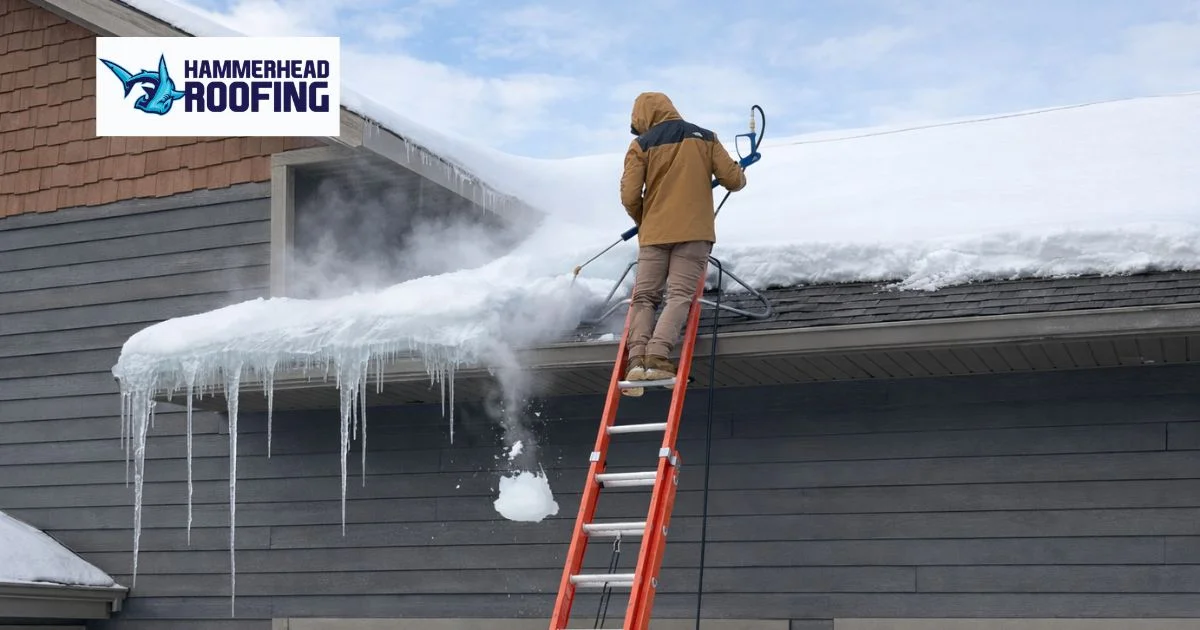
If you’re wondering about preventing ice dam damage on Connecticut roofs, the short answer is this: keep your attic properly insulated, make sure your roof has good ventilation, and clear snow before it turns into ice. These simple steps can help you avoid roof leaks, water damage, and expensive repairs during winter.
Key Takeaways:
|
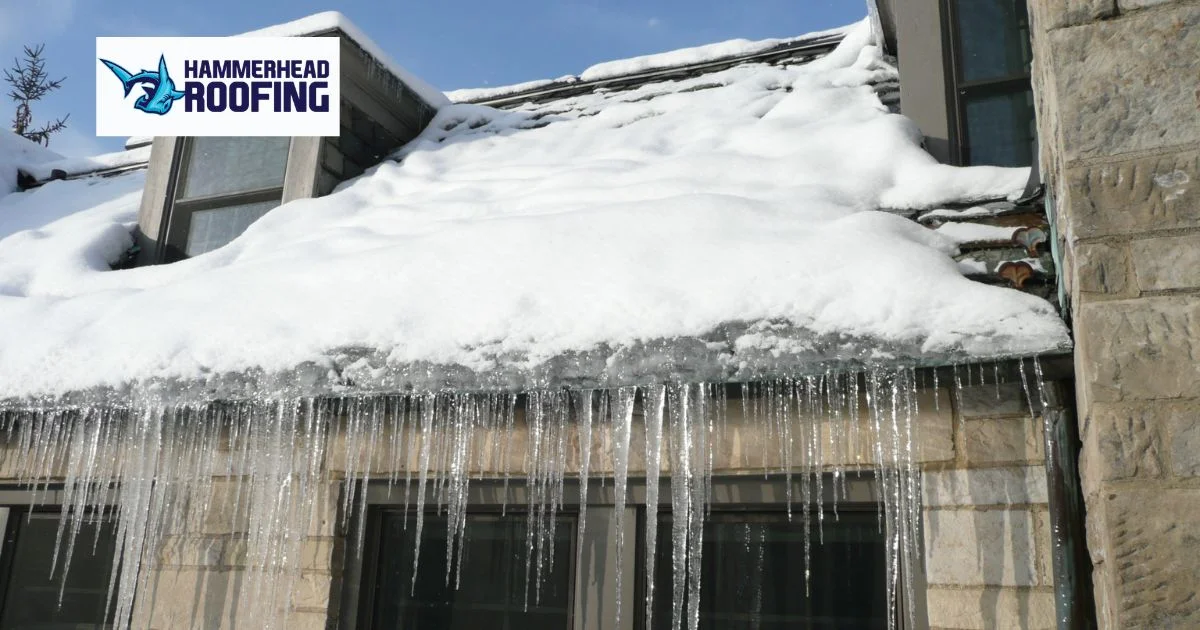
What Are Ice Dams and Why Do They Form?
An ice dam is a ridge of ice that forms along the edge of your roof. It blocks melting snow from draining, causing water to back up under the shingles.
Connecticut’s freeze-thaw weather makes this a common problem. Snow melts during the day, then freezes again overnight. Over time, that ice gets thicker and traps more water.
If you live in Killingly, CT, those long icicles hanging from your gutters may be more than a winter decoration. They could be the first sign of an ice dam.
Why Should You Prevent Ice Dam Damage?
Ice dams don’t just affect your roof. They can also damage your attic, ceilings, insulation, and walls.
Once water gets inside your home, repairs can add up quickly. You may end up dealing with:
- Ceiling stains
- Wet insulation
- Mold growth
- Damaged drywall
- Rotting wood
Preventing the problem is almost always easier and less expensive than fixing the damage later.
How Can You Prevent Ice Dams?
1. Improve Your Attic Insulation
A warm attic causes snow to melt from underneath the roof. The water then freezes at the colder roof edge, creating an ice dam.
Adding or upgrading attic insulation helps keep heat inside your home, where it belongs.
2. Keep Your Attic Well Ventilated
Good ventilation helps keep the roof at a consistent temperature.
When cold air moves through the attic, snow melts more evenly, making it much easier to prevent ice dams before they start.
3. Clean Your Gutters Before Winter
Clogged gutters slow down drainage and give water more opportunities to freeze.
Cleaning your gutters every fall won’t eliminate ice dams on its own, but it helps water move away from your roof more effectively.
4. Remove Heavy Snow Safely
After a major snowfall, use a roof rake to remove snow from the first few feet of your roof.
This reduces the amount of melting snow that can refreeze along the edges. Stay on the ground and never climb onto an icy roof.
5. Seal Air Leaks
Small gaps around attic hatches, vents, pipes, and light fixtures allow warm air to escape.
Sealing these leaks helps your insulation do its job while lowering your heating bills at the same time.
6. Schedule a Roof Inspection
A professional inspection before winter can uncover damaged shingles, poor ventilation, or areas where heat is escaping.
Fixing these issues before snow arrives is much easier than dealing with a roof leak in January.
What Are the Signs of Ice Dam Damage?
Ice dams usually leave a few warning signs before serious damage happens.
Look for:
- Thick icicles
- Ice along the roof edge
- Ceiling water stains
- Damp attic insulation
- Peeling paint
- Water dripping after snow melts
If you notice these signs, don’t wait. Small problems can turn into major ice dam damage if left alone.
Should You Remove Ice Dams Yourself?
Loose snow can usually be removed with a roof rake.
Once thick ice has formed, though, it’s safer to leave it to professionals. Trying to chip away the ice yourself can damage your shingles or lead to a fall. Professional ice dams removal is safer and helps protect your roof.
Why Are Connecticut Homes More at Risk?
Connecticut’s changing winter weather creates ideal conditions for ice dams.
Older homes in Killingly often have less insulation and outdated attic ventilation, allowing more heat to escape. That’s why one house may develop heavy ice while the neighbor’s roof stays clear after the same storm.
Frequently Asked Questions
How do I know if I have an ice dam?
Large icicles, ice along the roof edge, and water stains inside your home are common warning signs. If you notice them, it’s a good idea to have your roof inspected.
Can new roofs still get ice dams?
Yes. Even a brand-new roof can develop ice dams if the attic isn’t properly insulated or ventilated.
What's the safest way to prevent ice dams?
Keep your attic insulated, maintain good ventilation, clean your gutters, and remove heavy snow with a roof rake after major storms.
When should I schedule a roof inspection?
Fall is the best time. It gives you time to fix small roofing issues before winter weather arrives.
Is professional ice dam removal worth it?
Yes. Professional ice dams removal is much safer than trying to break up the ice yourself and helps prevent damage to your shingles.
Protect Your Connecticut Home Before Winter. Connect with HammerHead Roofing Today!
Winter weather is tough on roofs, but a little preparation can make a big difference. Preventing ice dam damage on Connecticut roofs helps protect your home, avoid costly repairs, and gives you peace of mind all season long.
If you’re in Killingly or a nearby community, HammerHead Roofing can help. From roof inspections to ventilation improvements and professional ice dams removal, our team is here to keep your home protected before the next snowstorm.
Call today to schedule your roof inspection!