
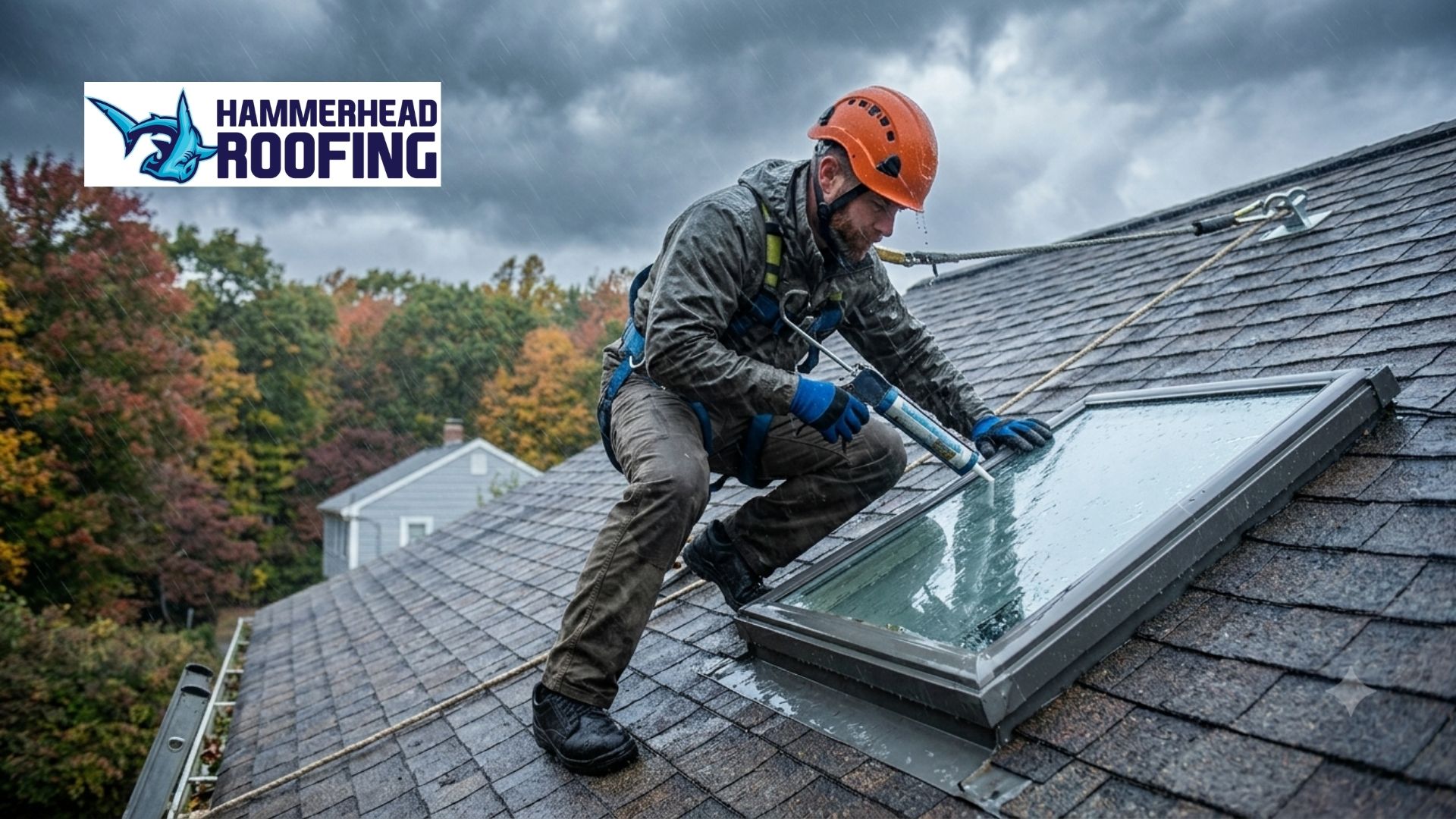
Skylights do not automatically make your roof unsafe during a storm. However, an older, damaged, or poorly installed skylight can become a weak spot when heavy rain, strong wind, hail, or snow hits. This guide explains what increases the risk of damage and how you can better protect your Killingly home.
Key Takeaways:
|
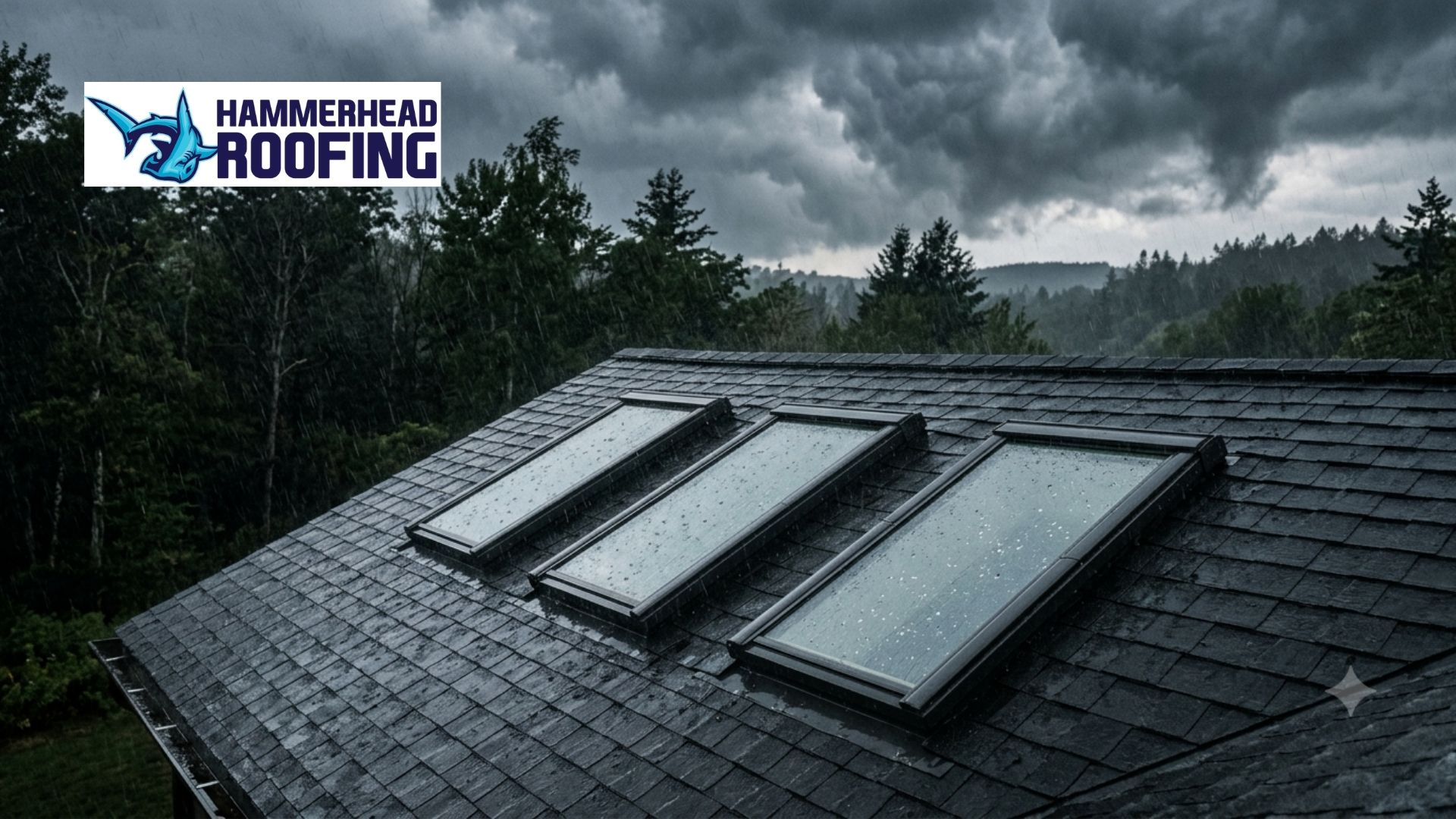
Why Can Skylights Make a Roof More Vulnerable During Storms?
Homeowners often ask “do skylights make a roof more vulnerable during storms?” because installing one requires an opening in the roofing system. Flashing, underlayment, seals, and the skylight frame must work together to keep water out.
1. Additional Seams in the Roof
A skylight adds seams where its frame meets the shingles and roof deck. These seams should remain watertight, but strong wind can push rain beneath loose shingles or into small gaps. Water may then travel along the decking before appearing as a stain inside your home.
2. Damaged or Improper Flashing
Flashing is installed around the skylight to guide water away from the opening. If it is loose, bent, rusted, or installed incorrectly, rain can slip behind it. This is one reason skylight damage Killingly homeowners notice may only appear during wind-driven rain.
3. Worn Seals and Aging Materials
Skylight seals can dry out, crack, or separate after years of sun, summer heat, and freezing temperatures. When people ask “do skylights make a roof more vulnerable during storms?”, the skylight’s age often matters. Fog between the panes may also mean the internal seal has failed.
4. Hail and Flying Debris
Hail, branches, and windblown debris can crack the glass, bend the frame, or damage nearby roofing materials. Even minor skylight weather damage can let moisture enter during the next storm, so check for chipped glass, dents, loose shingles, and other visible changes.
5. Snow and Ice Buildup
Snow can collect above and around a skylight, especially on roofs with a lower slope. As it melts, water may reach worn flashing or damaged shingles. Ice dams can make matters worse by blocking drainage and forcing water beneath the roof covering.
How Can You Reduce the Risk of Skylight Storm Damage?
If you are concerned about “do skylights make a roof more vulnerable during storms?”, good installation and regular maintenance can make a major difference. These steps help protect the skylight, roof deck, insulation, and rooms below it.
1. Choose Professional Installation
A skylight needs more than sealant around its edges. It should have the correct flashing, underlayment, and connection to the surrounding shingles. A professional can also choose a suitable location based on the roof’s slope, drainage pattern, and exposure to severe weather.
2. Schedule Regular Inspections
Have a roofer inspect the skylight, seals, flashing, and nearby shingles at least once a year. An additional inspection is helpful after hail, strong winds, heavy snow, or falling branches. A roofer may catch a loose component before it causes a visible leak.
3. Keep the Roof and Gutters Clear
Leaves, pine needles, and branches can collect above a skylight and prevent water from draining properly. Keep the roof, gutters, and downspouts clear, especially during fall in Killingly. Good drainage also lowers the chance of ice dams during winter.
4. Watch for Early Warning Signs
Look for water stains, peeling paint, damp drywall, musty odors, foggy glass, or active dripping near the skylight. A stain does not always mean the glass is leaking, since water can enter higher on the roof and travel along the decking before becoming visible.
5. Repair Small Problems Quickly
Do not wait for a minor leak to become steady dripping. Moisture can soak insulation, weaken roof decking, damage drywall, and encourage mold growth. Repairing loose flashing or a few damaged shingles is usually simpler than addressing widespread water damage later.
6. Replace an Aging Skylight
Replacement may be more practical if the skylight has recurring leaks, cracked glass, a warped frame, or failed seals. If you are already replacing your roof, ask whether the skylight should be replaced at the same time so the new flashing can be integrated correctly.
FAQs About Skylights and Storms
Do Skylights Make a Roof More Vulnerable During Storms?
Yes, skylights can make a roof slightly more vulnerable because they create an additional opening where water may enter. However, a properly installed and well-maintained skylight should remain secure and watertight during most storms.
Can Heavy Rain Cause a Skylight to Leak?
Yes, heavy rain can cause a skylight to leak if its seals, flashing, or surrounding shingles are damaged. Wind-driven rain can also push water into small gaps that may not leak during lighter rainfall.
How Can I Tell if My Skylight Has Storm Damage?
Common signs include dripping water, ceiling stains, cracked glass, fog between the panes, or damp insulation. You may also notice damaged shingles, bent flashing, or debris around the skylight after a storm.
Can a Storm-Damaged Skylight Be Repaired?
Yes, many storm-damaged skylights can be repaired by replacing worn seals, damaged flashing, or nearby shingles. Full replacement may be necessary if the glass or frame is badly damaged or the skylight continues to leak.
Should I Inspect My Skylight After a Major Storm?
Yes, you should check the skylight and surrounding ceiling after hail, strong winds, heavy snow, or falling branches. If you notice damage or moisture, schedule a professional inspection instead of climbing onto the roof yourself.
Protect Your Roof Today. Call HammerHead Roofing!
Storm damage around a skylight can be easy to miss until water reaches your ceiling or attic. If you notice water stains, cracked glass, damaged flashing, loose shingles, or other warning signs, HammerHead Roofing can inspect the area and find where the problem starts.
Our local team provides dependable roof inspections and repairs for homeowners in Killingly and nearby communities. Call today to schedule your roof and skylight inspection before a small issue turns into a more expensive repair.