
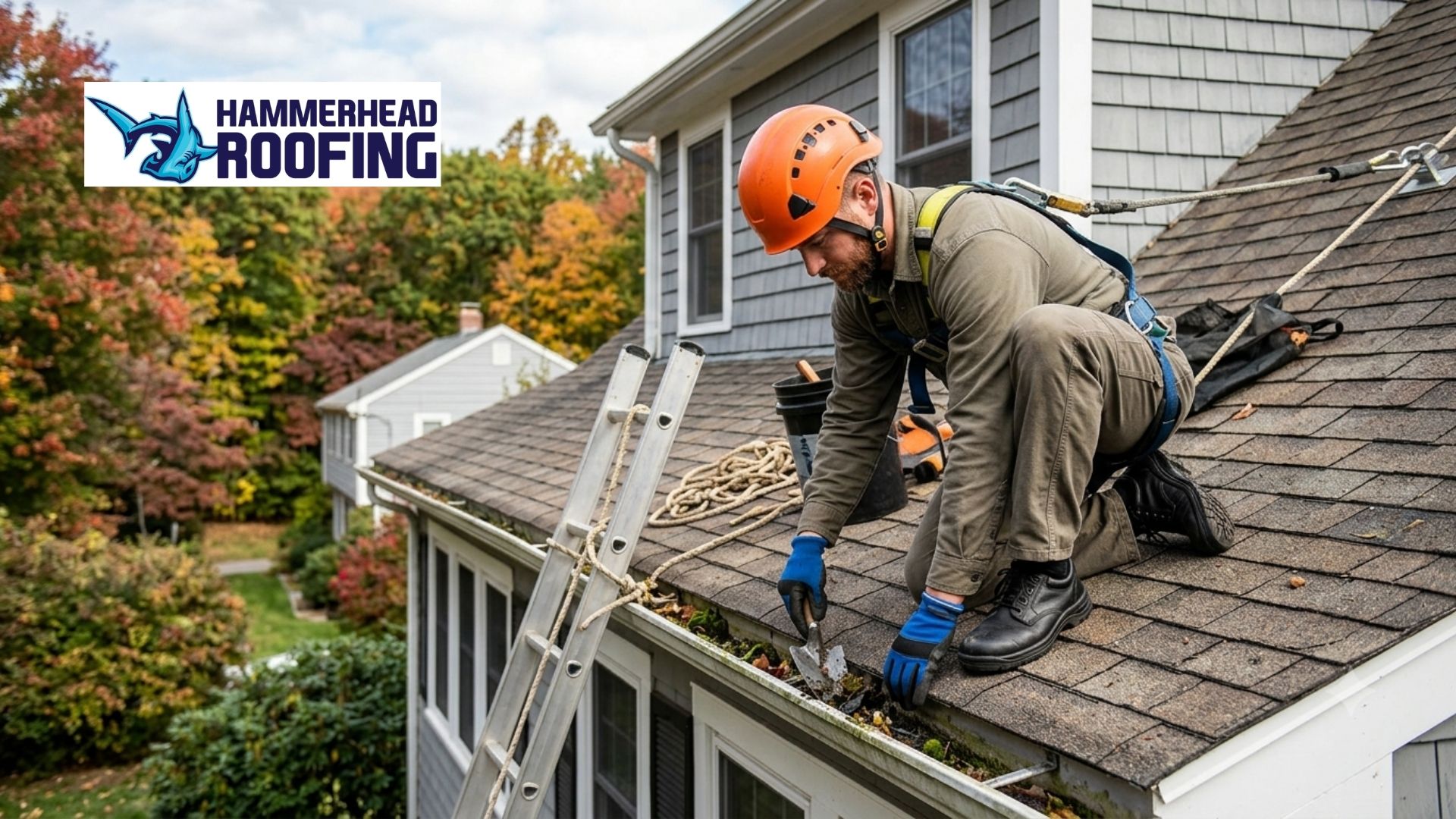
Clogged gutters can do more than leave dirty streaks on your siding. They can cause water to back up, soak the fascia, work its way beneath the shingles, and eventually leak into your attic. This guide explains how the damage happens, what signs to watch for, and how to protect your home.
Key Takeaways:
|
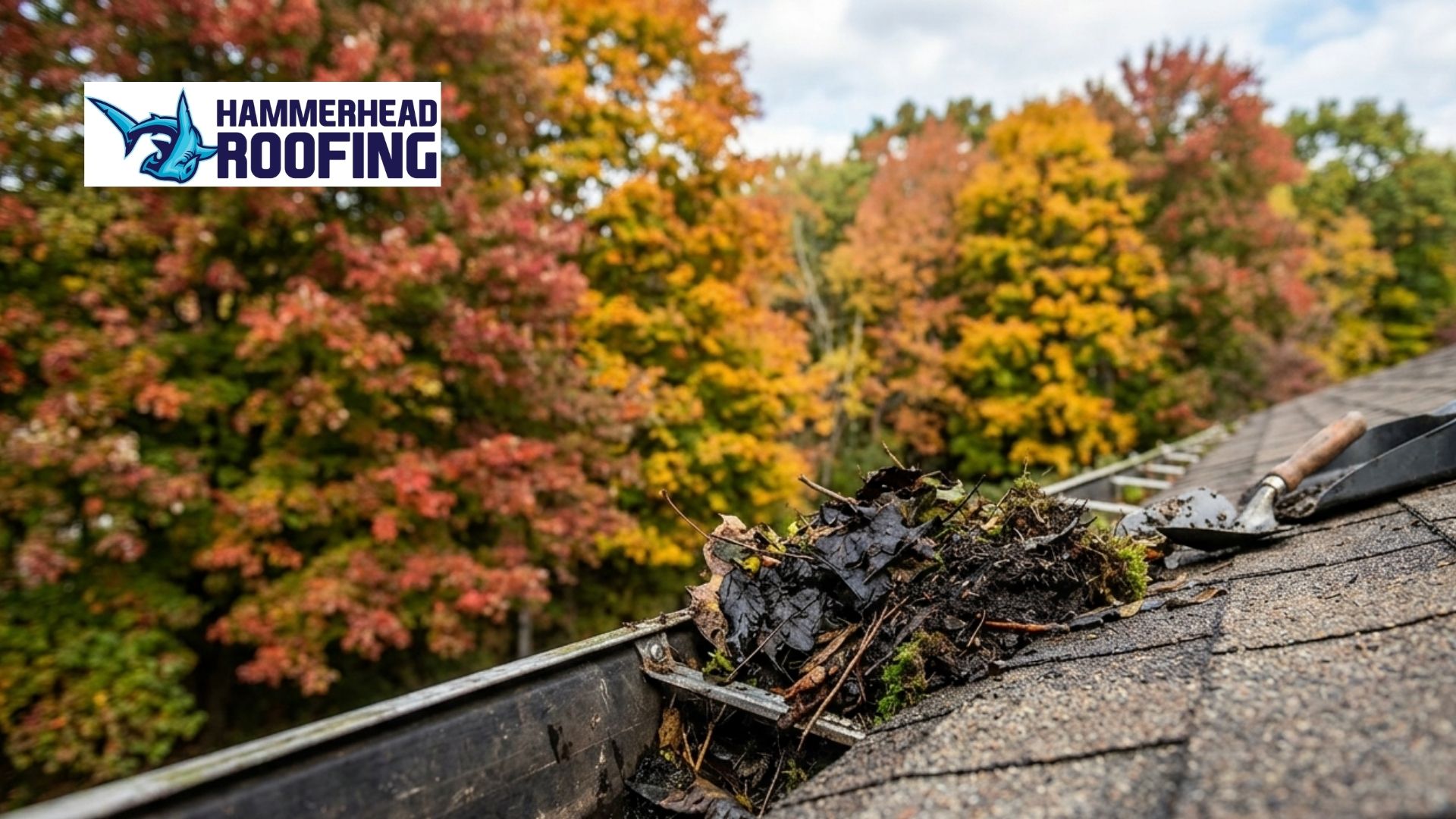
How Can Clogged Gutters Cause Roof Damage in Killingly CT?
Your gutters collect water from the roof and carry it away from your home. When leaves, twigs, pine needles, and roof granules block the system, water can sit inside the gutter or spill over its edges. That trapped water may reach the roofline and cause gutter roof damage. The problem can slowly spread from the gutters to the fascia, shingles, decking, and attic.
1. Water Gets Under the Shingles
Shingles are designed to move rainwater down the roof. They are not made to sit in backed-up water. When a full gutter holds moisture against the roof’s edge, water may work beneath the lower shingles and soak the materials underneath.
2. Fascia Boards Start to Rot
The fascia is the board located directly behind your gutters. Overflowing water can keep it wet long after the rain ends, leading to stains, peeling paint, and soft wood. Once the fascia weakens, the gutter may sag or pull away from the house.
3. Roof Decking Becomes Weak
Roof decking is the wood beneath the shingles and underlayment. If water reaches it repeatedly, the decking can swell, soften, or rot. Over time, you may notice a dip near the edge of the roof or moisture inside the attic.
4. Leaks Appear Inside the Home
Water does not always drip straight down from the damaged spot. It can travel along rafters or roof decking before reaching your insulation or ceiling. That is why an indoor stain may appear several feet away from the actual leak.
5. Mold Begins to Grow
Wet wood and insulation create a good environment for mold and mildew. You may notice a musty smell, dark attic stains, or damp insulation near an outside wall. Fixing the moisture source early can help keep the problem from spreading.
Why Are Clogged Gutters a Concern in Killingly?
Killingly homes face heavy rain, falling leaves, snow, and freezing temperatures. Even a small gutter blockage can quickly cause overflow during a strong storm, sending water into areas that should stay dry.
1. Fall Leaves Build Up Fast
Killingly and nearby towns have many mature trees. In fall, wet leaves can form a thick layer that stops water from flowing. Pine needles and small twigs may also collect near the downspout opening and create a tight clog.
2. Winter Ice Adds Weight
Water sitting in a clogged gutter can freeze when temperatures drop. As more snow melts and refreezes, ice adds weight to the system. This can bend the gutter, loosen its fasteners, and damage the fascia behind it.
3. Heavy Rain Reveals Hidden Problems
A partly clogged gutter may seem fine during a light shower but overflow during heavy rain. Water spilling behind the gutter is especially concerning because it can soak the fascia and lower edge of the roof without being easy to see.
What Are the Signs of Gutter Roof Damage?
You can spot many warning signs without stepping onto the roof. Look around your home during or shortly after rain while staying safely on the ground.
Common signs include:
- Water pouring over the gutter edges
- Gutters sagging or pulling away
- Plants growing inside the gutters
- Peeling paint or stains on the fascia
- Water marks on ceilings or walls
- Damp insulation or a musty attic smell
- Ice collecting along the roof’s edge
- Puddles forming near the foundation
A gutter that continues dripping long after the rain stops may be holding trapped water. If you are still asking “can clogged gutters cause roof damage in Killingly CT?”, stains or soft wood near the gutter line can be early signs that the answer is yes.
How Can You Prevent Clogged Gutter Damage?
A little maintenance can go a long way. Keeping your gutters clear helps rain and melting snow move away from your roof, siding, and foundation.
1. Clean the Gutters Regularly
Most homes should have their gutters cleaned in the spring and after the fall leaves drop. Homes surrounded by tall trees may need more frequent cleaning. If the gutters are high or difficult to reach, hiring a professional is the safer choice.
2. Check the Downspouts
A gutter may look clear while its downspout remains blocked. During a steady rainfall, check whether water flows freely from the bottom. The downspout should also direct water away from your foundation.
3. Trim Nearby Branches
Trimming branches above the roof can reduce the amount of leaves and twigs entering the gutters. It can also keep branches from scraping shingles during strong winds. Leave large or difficult branches to a qualified tree professional.
4. Inspect the Roof After an Overflow
Cleaning the gutters removes the blockage, but it does not repair damage already caused by water. If the gutters have been overflowing, have the nearby shingles, fascia, flashing, and decking checked for moisture.
What Should You Do When Gutters Overflow?
Do not climb onto a wet ladder or roof during a storm. Take photos from the ground and check your attic for damp insulation, stains, or dripping near the outside walls.
Once the weather clears, have the blockage removed and the roof edge inspected. When people ask “can clogged gutters cause roof damage in Killingly CT?”, the biggest concern is often the hidden moisture behind the fascia or beneath the shingles.
Frequently Asked Questions
How often should I clean my gutters in Killingly, CT?
Most gutters should be cleaned in the spring and again after the leaves fall. You may need more frequent cleaning if large trees surround your home.
Can one clogged downspout cause a roof leak?
One clogged downspout can cause water to collect and overflow during heavy rain. That water may soak the fascia or move beneath nearby shingles.
Can clogged gutters damage a newer roof?
Even a newer roof can develop problems when water repeatedly backs up along its edge. New shingles cannot fully protect the decking from standing water.
Can clogged gutters cause roof damage in Killingly CT during winter?
Trapped water can freeze, add weight to the gutters, and increase ice buildup near the roof. Melting snow may also back up beneath loose shingles or damaged flashing.
Do gutter guards stop every clog?
Gutter guards can reduce larger debris, but they do not remove the need for maintenance. Dirt, roof granules, small leaves, and pine needles can still be collected.
Protect Your Roof Before the Next Storm. Call HammerHead Today!
If you have noticed sagging gutters, roofline stains, or moisture in your attic, HammerHead Roofing can check the affected area and explain what needs attention.
We are an Owens Corning Preferred Contractor, BBB A+ Accredited, and offer a Directorii money back guarantee. So whatever roofing needs you have, we’re the best choice.
Contact us today to schedule a roof inspection in Killingly or nearby areas.